
 01934 515 668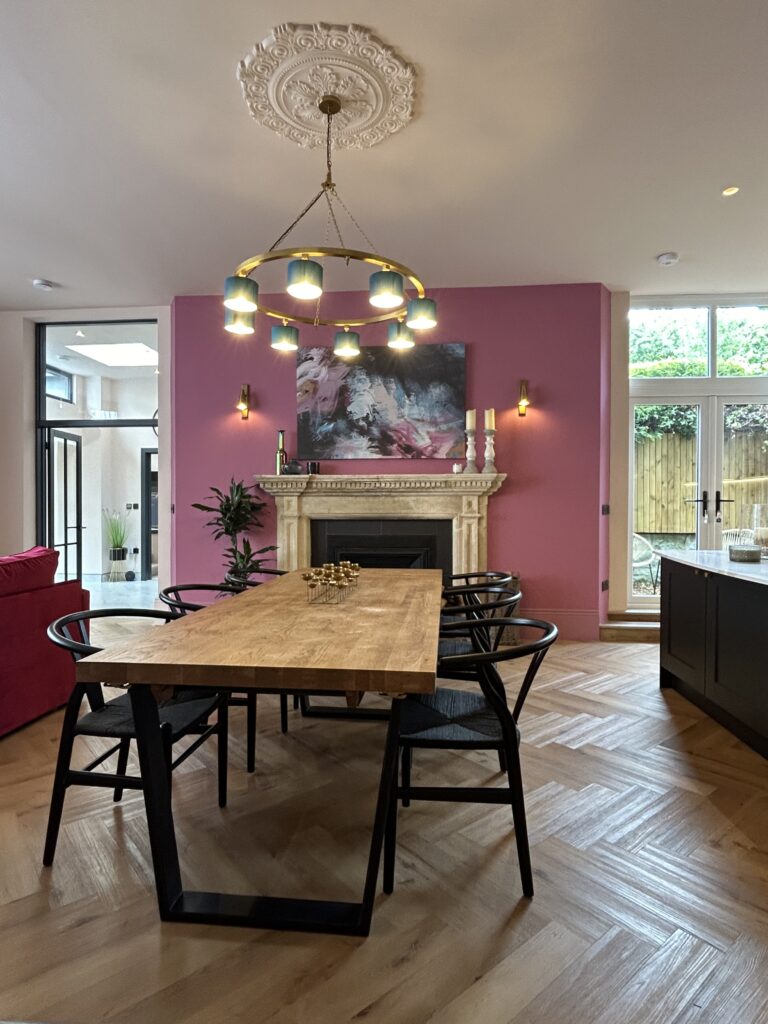
Renovating is worth it when you like your location, your house has good structural bones, and the problem is really the layout rather than the size or the site. Moving is worth it when the plot itself cannot give you what you need, however it is rearranged. Between those two honest answers sits most of the real decision, and it depends far more on your specific house and street than on any general rule.
Renovating and moving are among the most consequential financial and lifestyle decisions a homeowner makes, and the choice deserves a straight answer rather than a sales pitch either way. Moving house and renovating are not simply two prices to compare. One replaces your home entirely and asks you to start again somewhere unfamiliar. The other keeps everything you already like about where you live and changes what is not working. Both come with real costs, real risk, and a real chance of disappointment if you get the decision wrong. The only way to choose well is to look honestly at what each route actually involves before you commit to either.
Excellence Living has been renovating homes across Bristol, North Somerset and Somerset for over 30 years, and this guide sets out that decision as plainly as we would in a feasibility visit. We will not tell you renovating is always the answer. Sometimes moving is clearly right, and we say so.
Key takeaways
- Moving house comes with substantial unavoidable costs, including stamp duty, estate agent fees, solicitor fees and removals, none of which improve the property you end up in.
- Renovating keeps the location, garden, neighbours and commute you already have, and lets you spend your budget entirely on the property itself rather than partly on the transaction of moving.
- Every street has a ceiling that comparable properties struggle to exceed, and understanding where your property sits against that ceiling is essential before you spend on a major renovation.
- Renovating is clearly the right answer when you like where you live, the property is structurally sound, and the problem is how the space is arranged rather than how much space there is.
- Moving is honestly the better answer when the plot cannot deliver what you need at any reasonable spend, when you are already at or near your street’s ceiling, or when the structure itself is failing.
In this guide
Is renovating a house worth it? Weighing the pros and cons · The real cost of moving home · What a property renovation adds beyond resale value · The ceiling price on your street, and why it matters · When renovating is clearly the right answer · When moving is honestly the better answer · What the process with Excellence Living actually involves · Is renovating a house worth it? How to make the decision · Talk it through at a free feasibility visit · FAQs
Is renovating a house worth it? Weighing the pros and cons
Renovating a house is worth it when the pros, keeping your location and putting your full budget into the property itself, outweigh the cons, chiefly the risk of spending beyond what your street will support. Weighing those pros and cons against the alternative of moving, rather than assuming either route is automatically right, is the honest way to answer the question. The right answer depends on your specific property rather than on renovation in general.
The pros of a home renovation are real. You keep your location, you spend your budget on the property itself rather than partly on the transaction of moving, and you get years of improved daily use out of the home improvements you make. The cons are just as real. A project can become a money pit if it is planned without reference to your street’s ceiling, and every home renovation project carries some risk of unexpected costs once work is underway.
Several factors decide which way the answer falls for any individual home owner: the structural condition of the property, how close it already sits to its street’s ceiling, and whether the real problem is the layout rather than the size or the plot itself. The sections below work through each of those factors in turn, so the pros and cons apply to your actual house and street rather than to renovation as a general idea.
Want the exact figure for your property?
These are honest starting points. The free feasibility visit turns them into a fully specified price for your home.
Get My Free Feasibility VisitThe real cost of moving home
Moving home is often talked about as though the only number that matters is the cost difference between your current property and the one you want to buy. In practice, that is only part of what leaves your bank account, and the rest of it buys you nothing you can point to.
Stamp duty
Stamp Duty Land Tax is charged on the purchase of your next property, calculated against its price. For most households moving to a larger family home, this is a genuinely large sum. It is paid regardless of how long you plan to stay, and it does not improve the property you are buying in any way. It simply has to be paid to complete the purchase.
Estate agent fees
Selling your current home means paying an estate agent, typically a percentage of the sale price. On a property worth several hundred thousand pounds, that percentage becomes a huge cost, and it is paid out of your equity before you see a penny of it towards the next move.
Legal costs
Both the sale of your current home and the purchase of the next one need conveyancing, searches and legal work on each side of the transaction. These costs are unavoidable and apply whether the move goes smoothly or not. If a chain collapses partway through, some of that money is often lost entirely and has to be spent again with a different buyer or seller.
Removals
Packing up a household and moving it, often with temporary storage if completion dates do not align neatly, is its own significant cost, and what it buys is transport and boxes rather than a better property.
None of it improves the property
None of the money spent on moving improves the property you end up in, and that is the point that gets lost in most renovate-or-move comparisons. Every pound spent on stamp duty, agent fees, legal costs and removals goes towards the transaction itself, not towards the quality of the home you end up living in. Two households can spend the same total amount, one on moving and one on renovating. The renovating household will typically have more to show for it in the fabric and specification of their actual home, because none of their spend was consumed by the mechanics of a sale and purchase.
There is also the disruption to weigh, separate from the money. Finding a buyer, surviving a chain that can collapse at any point for reasons entirely outside your control, and then settling into a street, a school catchment and a set of neighbours you do not yet know, all carry a cost that does not show up on a completion statement. Renovating instead means weeks of building work in a property you have already chosen and a location you already know works for you. None of this means moving never makes sense, but it does mean the comparison should be made honestly, cost against cost, rather than assuming a move automatically saves money in the long run.
The chain risk that renovating simply does not have
A renovation project, once agreed and under contract, proceeds on a timetable that is largely within your control and your builder’s. Moving depends on a chain of other buyers and sellers, some of whom you never meet. Any one of them can pull out, change their mind, or hit a mortgage problem, and the whole transaction can stall or collapse regardless of how well you have prepared your own side of it. Money already spent on searches, surveys or legal work on a collapsed purchase is rarely recoverable, and that lost cost is a real risk moving carries, once under contract, that renovating does not carry in the same way.


← Swipe to see more projects →
Still deciding
Not sure what your project actually needs?
Use our home renovation project planner to work through what you want to change, which type of project fits your home and when you would want to start. It takes about a minute and it is there to get your thinking straight before you speak to anyone, not to price the job. The free feasibility visit is what produces a fully specified quote for your property.
Open the home renovation project planner
Takes about a minute. No obligation.
What a property renovation adds beyond resale value
Property value is the number most homeowners reach for first when weighing up a property renovation, and it matters. But it is not the only return, and treating it as the only one undersells what a well-planned project actually does for a household.
Value, honestly considered
A renovation that is well specified, properly built and signed off by Building Control does typically add to a property’s value. Exactly how much depends on your specific property, your street and what the work involves, and we will not put a percentage figure on that here because it varies too much by property to state honestly as a single number. What can be said plainly is that a poorly planned renovation, one that ignores the street’s ceiling price or over specifies for the area, can fail to return its cost at all. The next section covers why that ceiling matters so much.
Within that value picture, certain updates carry more weight than others. Energy efficiency work, insulation, glazing, heating upgrades and improved airtightness, feed directly into a property’s Energy Performance Certificate rating, because that is what an EPC assessment actually measures. Buyers increasingly weigh running costs alongside purchase cost, and improving those ratings tends to significantly increase a property’s market appeal as well as its daily comfort. Strategic updates to a kitchen or bathroom, delivered as part of a wider whole-house renovation rather than as a project on their own, carry similar weight, because they are usually what a viewer notices first. As with the headline value figure, we will not attach a percentage to any of this, because it varies too much by property to state honestly as a single number.
Use, which is the part homeowners actually live with
Value is what a home renovation is worth if you sell. Use is what it is worth every single day you live there before that, and for most households considering a renovation, use is actually the primary motivation. A kitchen that finally works for how a family cooks and eats. A layout that stops a home office from doubling as a spare bedroom. A property that finally suits how a household lives now, rather than how a previous owner lived decades ago. These are the home improvements a household actually experiences, long before any resale conversation happens.
A renovation that returns less than its full cost at resale can still be entirely worth it, because the years of improved daily living between now and any future sale can matter more to a household than that shortfall. Nobody sells a property the day after finishing the work, so the use of the space in the years in between is real value, even though it does not appear on a valuation.
Avoiding the cost of moving twice
Renovating properly the first time avoids a second, quieter cost: moving twice. A family that renovates to a genuine long-term brief, rather than a quick fix, avoids moving now only to discover within a few years that the new property does not quite work either, and facing the entire cost of moving again. Getting the current property right, once, properly, can be the more efficient route in the long run, even when the upfront spend looks larger than a modest move.
Certainty over the unknown
Renovating a property you already live in means you know exactly what you are getting. You know the damp patch that appears in winter, the neighbour on the left, the walk to school, the way the light comes through the kitchen in the afternoon. Buying a different property, however carefully viewed and surveyed, always carries an element of the unknown that only becomes clear once you have lived in it for a year through every season. A renovation removes that uncertainty from the equation. You are improving a known quantity, at a cost you already understand, rather than gambling on an unfamiliar one, and for many homeowners that certainty is itself worth something, even before the financial comparison is made.
The ceiling price on your street, and why it matters
Every street, every postcode, has a ceiling price. It is the point above which comparable properties on that street or in that immediate area struggle to sell, regardless of how much has been spent on them or how well the work has been finished. Buyers looking in a particular street or area have a budget shaped by what else is available nearby, by the schools, by the general character of the area, and a property that is dramatically better specified than everything else around it does not automatically command a higher price to match, because interest at that level is usually looking in a different area entirely. The ceiling matters enormously to the renovate-or-move decision as a result, because it is the single clearest test of whether a major renovation makes financial sense, in cost as well as in practical terms.
Why it matters before you spend
If your property sits comfortably below the ceiling for your street, there is genuine room for a renovation to add value as well as improve daily use, because the finished property still sits within what the local market is prepared to pay. If your property is already close to or at that ceiling, a large renovation spend risks adding a specification the street simply will not pay for. The renovation might be beautifully built and still fail to return its full cost, not because the work was wrong, but because the ceiling above it did not move to meet it.
The ceiling is not a reason to avoid renovating. It is a reason to understand where your property currently sits before deciding how much to spend and on what. A homeowner planning to stay for many years may reasonably decide the ceiling matters less to them than getting decades of better use from their home. Someone weighing a renovation primarily as an investment needs to take the ceiling seriously, because it decides whether that investment pays off. Understanding it before you spend is how you save money on a renovation that will not return its cost.
How Excellence Living talks about this honestly
We would rather tell a homeowner at the feasibility visit that a specific project is unlikely to be recovered at sale than build it anyway and let them find out later. That is an uncomfortable thing for a builder to say, and we say it anyway, because a project planned with the street’s ceiling in mind, built to suit what the area will support rather than what is technically possible, is a better outcome for the homeowner even when it means scaling a brief back.
Want the exact figure for your property?
These are honest starting points. The free feasibility visit turns them into a fully specified price for your home.
Get My Free Feasibility VisitWhen renovating is clearly the right answer
Three key things, taken together, point clearly towards renovating rather than moving.
You like where you live
Liking where you live is genuinely hard to replace: the commute, the school catchment, the neighbours, the general feel of the street. A property’s location is one of the few things a project can never change, and it is worth more than most families credit it for when they start pricing up the cost of finding it again elsewhere. Moving away from a location that already works, purely to gain space or a better layout, trades something proven for something unknown.
The house has good bones
A property with a sound structure, a roof in reasonable condition, and no serious damp or movement issues is a good candidate for refurbishment. Good bones mean the budget goes towards improving the finish and the layout, rather than being consumed by remedial work before anything new can be added.
The layout is the problem, not the size
The layout, not the size, is usually the real problem: many properties that feel too small are not actually short of square footage, they are poorly arranged. A kitchen cut off from the living space, a downstairs that does not flow, bedrooms that do not suit how a family actually uses them, a lack of storage space: these are layout problems, and layout problems are exactly what a well-planned renovation solves. Reordering the space a property already has, sometimes without adding a single square metre, can transform how a property feels to live in. Where all three of these conditions are true, renovating is very often the stronger answer, both financially and in terms of daily life, and it is the case Excellence Living sees most often at feasibility visits.
Ready to see what your space could become?
Get a detailed, fully specified quote so you know exactly what is included and why.
No obligation. No sales pressure. We come to you.
When moving is honestly the better answer
Say this plainly, because the honest cases where moving wins are real, and a homeowner deserves to hear them from a builder as clearly as the cases for renovating.
The plot cannot give you what you need
Some families need something the plot itself cannot provide, however it is rearranged or extended within reason. A garden of a certain size for a growing family, a specific number of bedrooms that the footprint genuinely cannot accommodate even with a well-designed extension, or a location entirely different to the current one. If what is needed cannot be built on the plot you have, no renovation, however well executed, solves that problem. This is the plainest case for moving rather than building.
You are already at your street’s ceiling
If your property is already at or close to the ceiling for its street, spending significantly more on a renovation risks putting more into the property than the local market will return, for the reasons covered above. This does not mean no work should ever be done. It means a major structural renovation aimed partly at value needs to be weighed very carefully against that ceiling, and in some cases the honest answer is that moving to a street with a higher ceiling, and renovating there instead, makes more financial sense than pushing further on the current property.
The structure is failing
The structure is failing when it has serious, active problems: significant subsidence, a roof beyond economic repair, or defects that make the cost of putting the building right disproportionate to what the finished property would be worth. Moving can genuinely be the more sensible route once that cost is weighed honestly. A renovation budget is best spent improving a sound structure, not rescuing a failing one, and a straight conversation about the condition of the building should happen before any renovation budget is committed.
Saying it plainly
We would rather say this at a feasibility visit than let a family commit budget to a renovation that was never going to solve their real problem. If your plot cannot deliver what you need, if you are already at your street’s ceiling, or if the structure is failing, moving deserves to be taken seriously as the better answer, and a good builder tells you that rather than pretending otherwise to win the job.
What the process with Excellence Living actually involves
Once renovating is the right answer, what does the process actually look like? Excellence Living has been renovating homes across Bristol, North Somerset and Somerset for over 30 years, across projects ranging from a single room to a full structural reorganisation. Work is carried out by an in-house team rather than subcontracted labour, which keeps labour costs and accountability under one roof. Every project runs under one contract with a dedicated Site Manager as a single point of contact throughout.
A full house renovation covers reordering and upgrading the space a property already has: structural alterations, removing walls, rewiring and replumbing, new floors, ceilings and doors, heating, damp and insulation, re-rendering, each bathroom and kitchen brought up to date as part of the wider project, and full refurbishment of a tired or inherited property. Every project starts with a free feasibility visit, with no obligation, where the honest conversation above happens in person, against your actual property and your actual street, before any figure is discussed. A full house renovation is typically a five-figure to six-figure project depending on scale, and the feasibility visit is where that gets turned into a fully specified cost for your property. Our home renovation project planner gives an indicative range beforehand, working from the same Under £25,000 / £25,000 to £50,000 / £50,000+ bands used to open every renovation conversation.
What drives house renovation costs
Renovation costs vary depending on several factors specific to your property, rather than on a fixed price list. The main factors are the scale of the work, the structural condition of the property, the specification chosen for finishes and fittings such as doors, floors and fittings for a kitchen or en suite bathroom, and labour costs, which make up a large share of any full house renovation. A property with good bones keeps costs lower, because less of the budget goes on remedial work before anything new is added. A property with damp, movement or an ageing roof pushes costs up before a single wall is moved, which is how a renovation becomes a money pit if the condition is not accounted for at the outset.
Budget overruns can exceed the quoted price by 10 to 20 per cent, and published advice on renovation contingency consistently falls within that range. Plan nearer the upper end of that range for an older or neglected property, and nearer the lower end for a sound property being updated. Opening up a wall can reveal wiring or plumbing that needs replacing anyway, and older properties in particular can hold surprises once work is underway, which is why setting that contingency aside from the outset, rather than adding it in after the event, is worth doing before work starts rather than during it. Whilst every renovation can uncover genuine unknowns, Excellence Living believe homeowners should never be surprised by how changes are handled: any additional requirements are clearly documented, explained, fully costed, discussed with you, and agreed in writing before work proceeds.
Excellence Living prices house renovation costs properly at a feasibility visit rather than off a rough estimate, for exactly this reason. Comparing the cost of two renovations by their headline figure alone is misleading if the scope is not the same, because a lower cost project that skips proper insulation or leaves old wiring in place is not cheaper in any real sense, it simply defers cost to a later date. The only honest way to compare cost is specification against specification, measured against the actual condition of your property.
Other costs to plan for
A full structural survey, or a more focused structural survey of a single wall or floor, often shows up problems such as a new roof, a failing damp course or drainage before they add a huge amount to costs once work is underway. That is exactly the kind of detail that matters to any home owner weighing up renovation work before it starts, since structural work across renovation projects of any size is usually where costs differ most from a rough estimate. For a full structural reorganisation, some households need temporary accommodation whilst work is carried out, though a cost effective, staged approach is how many save money and avoid that need altogether. Excellence Living prices house renovation costs against your actual property rather than a national average that tells you little about any one home, and the same approach applies whether the project covers a dated bathroom, the outdoor space, or the whole house.
Internal renovation, without an extension
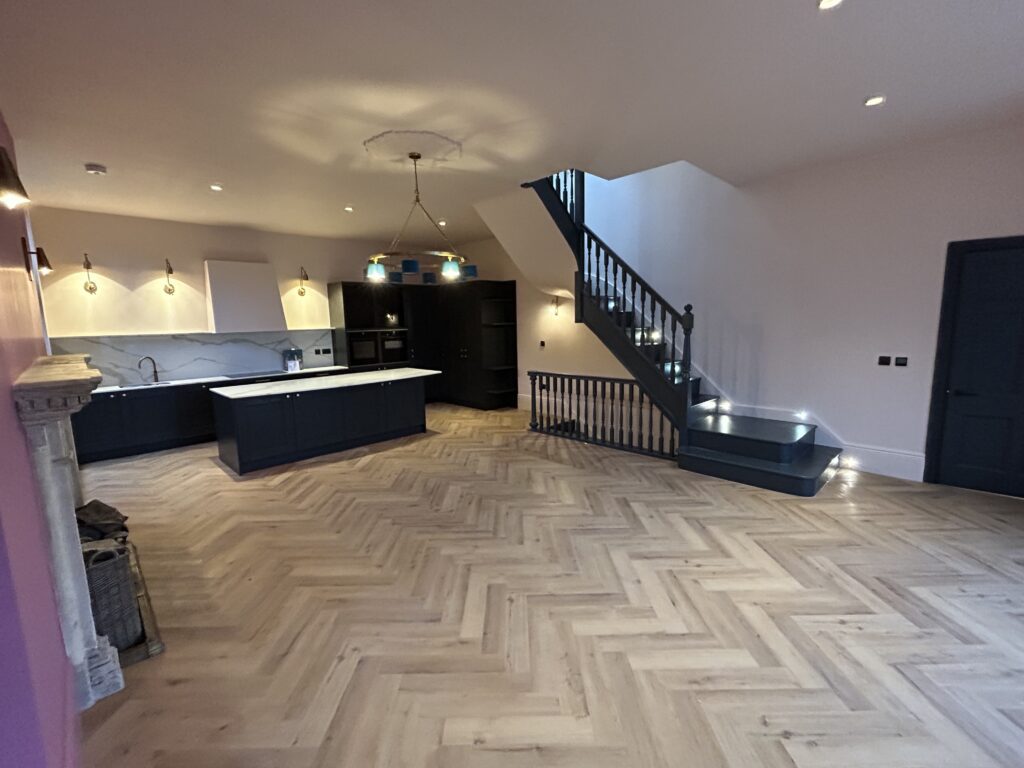
Not every home renovation project needs an extension to be worth doing. Many of the renovations Excellence Living carries out are an internal renovation only, reordering and upgrading the space a property already has rather than adding to its footprint. A full bathroom renovation can be part of that wider internal project, alongside kitchen and en suite work, rewiring and structural change, but it is delivered as part of a whole-house project rather than offered as a standalone service on its own. The goal is not chasing a dream home ideal, it is making the property you already have into a home that actually works for how you live, without the huge disruption or cost of building outwards.
Two examples show what a full house renovation looks like in real life. Tom and Kate Clark’s full house renovation in North Somerset and Tim and Hazel Hayden’s Clevedon full house renovation both started from the same question this guide opens with, and both are worth reading in full to see how the answer played out for a real family. Spencer and Kirsty Buck’s extensive house renovation and Sharon and Richard Dunn’s whole house re-render and external works show the range of what a renovation can cover, from structural reordering to the external fabric of a property.
Some renovations are more focused. Aly Kounnou’s lounge renovation shows that not every project needs to touch the whole property to be worth doing. If your priority is a specific room rather than the whole property, our kitchen renovations, loft conversions and garage conversions pages cover a loft conversion or garage conversion in more detail. Some renovation projects also include a rear or side extension where the plot allows it and the brief calls for it, though that is a decision made project by project at the feasibility visit rather than something to plan around in advance.
Is renovating a house worth it? How to make the decision
Bringing the whole comparison together, across renovation projects of every size and the renovation costs that go with them, the decision comes down to a small number of honest questions, answered against your specific property rather than in general. Do you like where you live, setting the property itself aside for a moment. Does the property have good structural bones, or are there problems that need fixing before anything else can be improved. Is the real issue the layout, the way the space is arranged, rather than a genuine shortage of square footage or a plot that cannot deliver what you need. Where does your property currently sit against the ceiling for your street, and how much room does that leave for a renovation to add value as well as improve daily use.
Answered honestly, most households already know which way these questions point before they finish asking them. The value of going through them properly, ideally with a builder who will tell you plainly if moving is the better route, is that the decision gets made on the actual facts of your property and your street, rather than on a general assumption about what renovating or moving is supposed to cost.
Talk it through at a free feasibility visit
There is no charge and no obligation for a feasibility visit with Excellence Living. Over 30 years working across Bristol, North Somerset and Somerset on renovation projects of every size, with more than 30 Google reviews and a 5 star rating, our in-house team will look at your specific property, your street and your family’s actual needs. We will give you a straight, honest cost for the work rather than a rough guess, including telling you plainly if moving is the better route for your circumstances. Call 01934 515 668, or start with our request a quote page to arrange a visit.
Frequently asked questions
Is it cheaper to renovate or move house?
Whether renovating or moving is cheaper depends entirely on your specific property, your street and the scope of the work. Moving carries costs, stamp duty, estate agent fees, legal costs and removals, that apply regardless of how large or small the property you buy is, and none of that spend improves the property you end up in. Renovating puts the equivalent spend directly into your existing home, where it goes on the fabric of the property rather than on the transaction, which is where the real cost difference between moving and renovating usually sits. Whether that makes renovating cheaper overall depends on the scale of work needed and where your property sits against your street’s ceiling.
How do I know if my house is a good renovation candidate?
Three things matter most: whether you like the location, whether the property has good structural bones, meaning no serious damp, movement or roof problems, and whether the real issue is the layout rather than a genuine shortage of space. This applies across renovation projects of every size. Where all three point the same way, and the likely cost is proportionate to what the property is worth, renovating is usually the stronger answer, both financially and for daily living.
What is a street's ceiling price, and why does it matter for a renovation?
A street’s ceiling price is the point above which comparable properties on your street or in your immediate area struggle to sell, regardless of specification. It matters for a renovation because pushing a property’s value significantly above that ceiling risks not returning its full cost at sale, even when the work itself is excellent. Understanding where your property sits against that ceiling before committing to a large renovation budget is one of the most useful things a feasibility visit can tell you.
Does renovating always add value to a house?
Not automatically. A well-planned renovation, built to suit what your street and area will support, typically does add value, but a project that ignores the local ceiling price or over specifies for the area can fail to return its full cost. Value is also only part of the return. The years of improved daily use before any future sale are worth considering alongside the resale figure.
When should I move house instead of renovating?
Moving is the honest answer when your plot cannot deliver what you need however it is rearranged, when your property is already at or close to your street’s ceiling so a major renovation risks not returning its cost, or when the structure itself has serious, active problems that make repair disproportionate to the value of the finished property. A good builder should tell you plainly when one of these applies rather than pushing you towards a renovation that will not solve the real problem.
How much does a full house renovation cost?
A full house renovation is typically a five-figure to six-figure project depending on scale, and Excellence Living quotes per property after a free feasibility visit, where the house renovation costs are fully specified against your actual property. There is no standard cost that applies across every property, because the scope varies enormously between a targeted refurbishment and a full structural reorganisation.
Can a renovation include an extension?
Yes, some renovation projects include a rear or side extension where the plot allows for it and the brief calls for it, though this is assessed project by project at the feasibility visit rather than assumed from the outset. Extensions are a distinct project type with their own considerations around planning and cost.
What counts as a full house renovation?
A full house renovation covers reordering and upgrading the space a property already has: structural alterations, removing walls, rewiring and replumbing, new floors, ceilings and doors, heating upgrades, damp treatment and insulation, re-rendering, and full refurbishment of a tired or inherited property. It does not necessarily mean every room is touched. Some homeowners renovate the whole property, others focus on specific areas such as a kitchen, bathroom, loft or garage.
Is it worth renovating a house I am not planning to sell soon?
Often, yes, and in many cases this is when renovating makes the most sense. If you are not selling in the near future, the daily use of a better laid out, better specified home over the years in between is a real and significant return, even before any future resale value, or the cost of moving instead, is considered. The ceiling on your street matters less to a homeowner planning to stay for the long term than it does to one renovating primarily as a short-term investment.
Should I get a survey before deciding to renovate or move?
Yes. Understanding the structural condition of your current property, whether it has good bones or problems that need addressing first, is an important part of making this decision properly. A free feasibility visit with Excellence Living includes an honest, in-person assessment of your property, which is a sensible starting point before committing to either route, alongside any formal survey you may separately choose to commission.
How long does a full house renovation take compared with moving house?
Both take time, and neither is instant. A renovation timetable is largely within your control and your builder’s once the project is agreed, working to a schedule set out before work starts. As a guide, a single-room renovation is typically a matter of weeks, whilst a whole-house reconfiguration runs to several months, because the duration of a home renovation depends significantly on the scope of work involved. Moving depends on a chain of other buyers and sellers, and the timescale is often outside your control, since any one link in that chain can delay or collapse the whole transaction regardless of how prepared you are.
Can I renovate in stages instead of all at once?
Yes, and many homeowners do exactly this, tackling one area of the property at a time rather than a single large project. Staging work can spread cost over a longer period and lets a family live with and adjust to changes room by room. Discuss staging at the feasibility visit, since some structural work is more efficient to do together than in separate phases, and doing it once is usually what saves money in the long run.
Get Your Renovation Price
Every renovation is different, so the only accurate number is the one worked out at your property. Tell us what you are planning and we will arrange your free feasibility visit, then give you a fully specified price with everything itemised.
"*" indicates required fields