
 01934 515 668

The right renovation company designs and builds under one contract, employs its own tradespeople rather than a shifting chain of subcontractors, puts a named Site Manager on your project day to day, and gives you a fully specified quote before any work starts. Insurance, references and a written programme all exist to prove that is real, so check every one of them before you sign anything.
A whole-house renovation is one of the largest sums most people ever spend on their home, and it is spent in stages, on trust, often whilst you are still living in the building. Getting the choice of contractor wrong is expensive to unwind, because by the time a problem shows up, walls have already come down and floors have already gone in. This guide sets out exactly what to check before you hire someone to renovate your home, how to read a renovation quote properly, the questions worth asking on the first visit, and the warning signs that should stop you signing anything at all.
Most people only renovate once or twice in a lifetime, so it is worth getting this decision right. It is written by a company that answers every one of these questions in the affirmative. We would rather you held every renovation company you speak to, including us, to the same standard, whatever renovation services you eventually choose or whichever renovation consultant sits across the table from you.
Key takeaways
- A renovation company offering design and build under one contract gives you a single point of accountability from first survey to completion, rather than two organisations who can each blame the other when something goes wrong.
- An in-house team delivers more consistent quality than a chain of subcontractors, because the same people carry out the work on every renovation project and the same company is answerable for it.
- A dedicated Site Manager, present day to day rather than a rotating cast of trades arriving unsupervised, is what actually keeps a renovation project on programme and to specification.
- A fully specified quote lists every element of the work as a named, itemised cost. A figure that looks unusually cheap has almost always left something out of the specification, not found a genuinely cheaper way to do the same job.
- Ask who submits Building Control, ask to see a written programme before you sign, and treat pressure to decide quickly, cash discounts, or a reluctance to give recent local references as reasons to walk away.
In this guide
How to Choose a Renovation Company: What to Check Before You Hire · Design and build, or managing separate trades yourself? · How to read a renovation quote · The questions worth asking your renovation consultant on the first visit · Warning signs that should stop you signing · Aftercare, guarantees and warranties · What a home renovation can, and cannot, do · What to do next · FAQs
How to Choose a Renovation Company: What to Check Before You Hire
A whole-house home renovation touches structure, wiring, plumbing, heating and finishes, often all at once and often in a property you are still living in whilst it happens. That scale is exactly why the checks below matter more here than on a smaller project, whatever renovation services you are comparing and whatever you call the people doing them, builders, contractors or renovation specialists. Hiring the wrong one is a far more expensive mistake here than hiring the wrong decorator. A reputable renovation company should answer every one of them without hesitation, and if the answer is vague, that vagueness is the answer. Working through them in this order, rather than being guided along by whichever points a contractor chooses to raise first, is a structured way to avoid the problems that catch people out on a renovation project, whether you renovate once or have done it before.
Registered Tradespeople: The First Sign of a Good Contractor
Verifying that every trade on your project is properly licensed and insured is the single most important check on this list, and the easiest one to let slide. Ask who is registered for what, before anything is signed. Work carried out by an unregistered electrician or an unregistered gas or heating engineer, for example, often has to be inspected and certified retrospectively, at your cost, because the person who did the work was not able to self-certify it under the relevant competent person scheme. Ask, too, whether the trades on your whole-house home renovation, builders included, hold the licences each one legally requires, rather than assuming registration in one trade covers all of them, whether they are wiring a bathroom or fitting a boiler. On a whole-house renovation, where electrics and heating are routinely both being touched, that question is worth asking early rather than discovering the answer once the work is already covered over.
Membership of a recognised professional trade body is not, by itself, proof of quality, but it is a further, useful check alongside registration and insurance, not a replacement for either. Proper vetting means looking at registration, cover and accreditation together, rather than accepting any one of them as proof of the other two. It means the business has agreed to be checked against a standard and is accountable to somebody beyond you if things go wrong. Ask what accreditation a company holds, what it actually covers, and whether it is the contractor itself or an individual within it that holds it.
Proven experience and recent references you can actually contact
Prioritise renovation specialists with a genuine, demonstrable track record on projects of a similar scale to yours, and ask to speak to previous clients directly rather than being shown a gallery of finished photographs. That research is worth the extra time it takes, because photographs alone rarely show how a finish has held up. Experienced renovation specialists will put you in touch with people who lived through the disruption, not just the ones who happened to leave a five-star review. A contractor that has done this kind of renovation work many times over many years will also have seen most of what can go wrong on a period property, an inherited house, or a tired one, and will plan and quote for it accordingly rather than discovering it as a surprise once the walls are opened up. Most people who renovate more than once ask sharper questions the second time around, and know that good builders welcome that scrutiny.
Seeing finished work in person, not just in photographs, tells you things a picture cannot: how a room actually feels once the scaffolding is down, how a re-render has weathered a winter, how a finish holds up close up rather than from a flattering angle in the real world. It gives you a much clearer idea of what to expect than any brochure. Ask to walk through a completed renovation before you commit to your own.
What Online Reviews Tell You About Renovation Specialists
It is worth learning to read reviews properly, not just skim a star rating. Consistent positive feedback across several different platforms, rather than a strong score confined to just one, is a stronger signal, because it is harder for a handful of curated reviews to line up everywhere at once. Cross-reference what clients say on more than one platform and look at how a business’s renovation work is described over time rather than only in the last few months, since long-term satisfaction is what tells you whether a finish, a heating system or a re-render has actually held up. Word of mouth from friends or neighbours who have used a contractor is worth as much as any review platform, often more, because they have no reason to only tell you the good part.
Evaluate communication from the very first meeting: how a renovation consultant handles you before you have signed anything is also worth watching. How quickly and how clearly your questions get answered at the first meeting, and whether a follow-up query gets a straight, professional answer rather than a vague one, says a good deal about how you will be communicated with once the project is under way and harder to walk away from.
Insurance: public liability and contract works
Ask for proof of valid public liability insurance and contract works cover, not just a verbal assurance that the business is insured. Public liability protects you if someone is injured or your property is damaged during the home renovation. The works cover, sometimes called contractors all risk cover, protects the build itself, including materials on the property and work in progress, for the whole period your home is opened up, whether that is a stripped-back bathroom or an open structural wall. A home renovation can leave a house partially stripped back for weeks, so that cover matters here more than on almost any other type of project.
Do not accept a contractor simply telling you they are insured. Ask to see the certificates, and if you are in any doubt, ring the insurer named on the certificate to confirm the policy is live and covers the details of the work you are agreeing.
In-house team, or a chain of subcontractors?
This is one of the most consequential questions you can ask, and one of the easiest to avoid asking. A renovation company using its own in-house tradespeople, real renovation specialists rather than a rotating cast of subcontractors, tends to deliver more consistent quality, because the same electricians, plasterers, joiners and builders work to the same professional standard on every renovation project, and the reputation of the business rests on their work specifically.
A chain of subcontractors works differently. Trades are booked project by project, sometimes by a subcontractor booking a further subcontractor beneath them, and the contractor managing your home renovation may never have worked with some of the people on your project before. When something goes wrong, responsibility can become genuinely difficult to pin down between the business you signed with and the person who was actually on the tools. Ask directly how much of the work is carried out in-house, how much is subcontracted, and to whom.
Excellence Living work with our own in-house team rather than subcontracting the work out, which is a deliberate choice rather than an accident of scale. It is what allows one agreement to cover design, structural work, and every trade involved, with one company answerable for all of it.
What Makes a Renovation Run Smoothly, Day to Day
A home renovation is not run from an office. It is run in person, every day, by whoever is physically present to make decisions when something does not go to plan, which on a whole-house project it occasionally will. Ask who that person is by name, not by title, and ask how you reach them directly.
A dedicated Site Manager, present on your renovation project day to day, is what keeps trades arriving in the right order, deliveries turning up when they are needed rather than blocking access, and problems caught before they become expensive. That is what makes a renovation run smoothly. Without a named person doing that work, a renovation runs on whoever happens to be free that morning, and that shows in the finish. Every Excellence Living project has one, for exactly this reason.
Building Control, and who submits it
Building Regulations apply to structural alterations, rewiring, replumbing, and most of what a whole-house home renovation involves. Ask plainly who submits Building Control on your project, whether that is included in the price you are being quoted by the contractors involved, and who deals with the inspections as the work progresses, so nothing derails your plan halfway through.
A competent team of renovation specialists manages this as standard, delivered as part of their core services, and hands you a completion certificate at the end, rather than leaving you to chase paperwork once the trades have moved on. That certificate is not a formality. When you come to sell, a buyer’s solicitor will ask for it, and a renovation without one can hold up a sale or reduce what a buyer is prepared to offer for work they cannot confirm was done properly.
A written programme, before you sign
Putting everything agreed in writing before work starts is non-negotiable, including a realistic programme setting out the order of works and roughly how long each stage will take. “A few months” is not a programme. A contractor who is confident in their own scheduling can set out a start date and a sequence of stages, and explain honestly what could reasonably move it. A company that cannot plan its own schedule with confidence is unlikely to plan yours accurately either.
Planning and permits can extend a renovation’s timeline more than almost anything else, and two things genuinely can move that date before work even reaches your house. Where planning permission, listed building consent or Building Control approval is needed, that process can add weeks or months before construction starts, so an honest renovation company builds it into the programme rather than promising a start date ahead of consent. Contractor availability matters too: a contractor that gives you the date its own team can genuinely begin, rather than the date that is easiest to say in a sales meeting, is one whose programme is worth trusting.
Verbal reassurance given at a sales visit is not a programme and it is not enforceable. Ask to see it written down in advance, and be wary of any company reluctant to commit a timescale to paper.
Payment schedule, and what a fair one looks like
A fair payment schedule is staged against milestones actually reached on the project, not against a calendar. A modest amount to secure your slot in the programme is normal. A demand for a large proportion of the total cost before meaningful work has started is not, and it increases your exposure if the contractor is unable to complete the project.
Ask for the payment schedule written down alongside the quote, and check that each stage corresponds to work you can see has genuinely been completed, rather than an arbitrary date on the calendar.
Retention
Retention is a small percentage of the final payment held back for an agreed period after completion, so that a contractor has a real incentive to fix any snagging items rather than simply promise to. It exists because the small defects that show up in the weeks after a renovation, a door that needs easing, a decoration touch-up, a heating balance, are far easier to get resolved whilst a final payment is still outstanding than afterwards.
Ask whether retention forms part of the payment schedule and what triggers its release. A company confident in its own finish should have no objection to it.
Want the exact figure for your property?
These are honest starting points. The free feasibility visit turns them into a fully specified price for your home.
Get My Free Feasibility VisitDesign and build, or managing separate trades yourself?
There are two honest ways to run a whole-house home renovation, and neither is automatically wrong for every homeowner.
Design and build means one company handles the structural design, the engineering, the approvals and the construction itself, all under a single contract. You have one point of contact, one programme, and one company accountable for the whole job from first survey to completion certificate. Excellence Living work this way, so the structural side, the person managing your job, and every trade involved answer to the same company.
The alternative is to appoint an architect, an interior designer or another independent designer, get the drawings approved, and then find and manage each trade yourself, whether that means booking builders directly or a set of contractors, or through a project manager you hire separately. This genuinely suits some homeowners, particularly where you already work in construction, have the time to be on the project regularly, and want direct control over choosing every individual tradesperson.
For most people taking on a whole-house home renovation whilst also working a full-time job and living somewhere nearby, that route carries a real cost that rarely gets mentioned until it happens. When something does not fit on the job, a plumber, an electrician and a builder booked separately can each have a reasonable explanation for why the problem belongs to someone else, and you are the one left resolving it, both in time and in money. A single agreement removes that gap, because there is nobody else for the accountable company to point at.
One contract. One programme. One name on the completion certificate at the end.
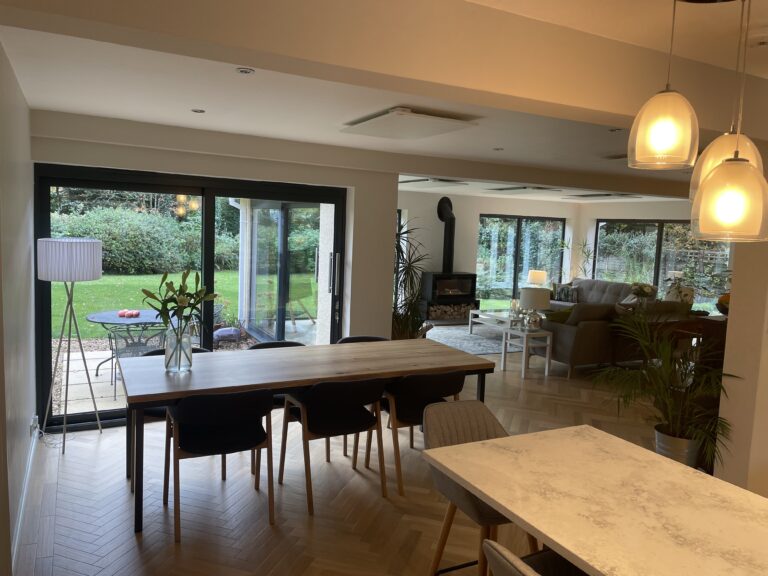
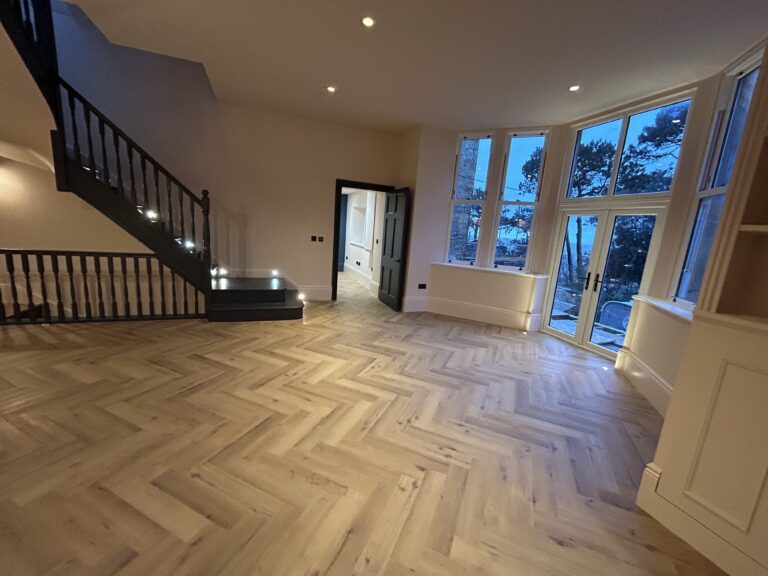
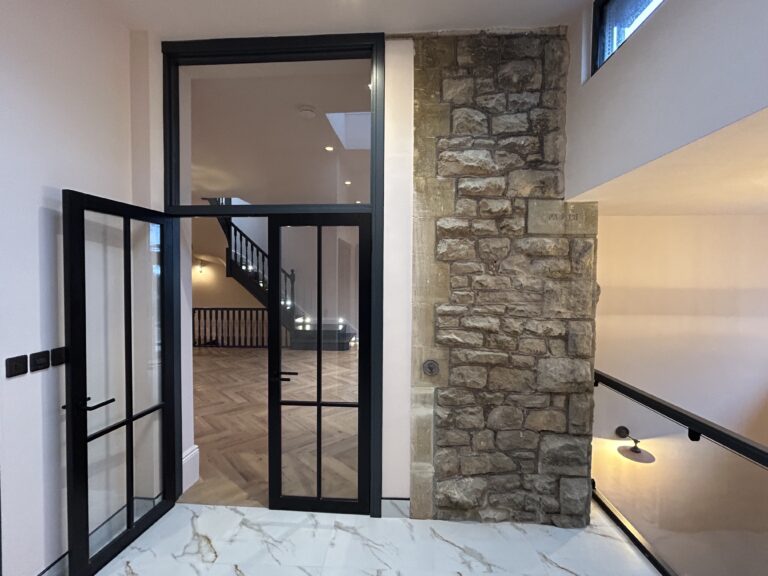


← Swipe to see more projects →
How to read a renovation quote
A fully specified quote is a document detailed enough to hand to a structural engineer and a Building Control officer and have both understand exactly what is being built. It names the structural work, the electrics, the plumbing and heating, insulation, plastering, flooring, decoration and the Building Control fees, each as a costed, individually named item rather than folded into one lump figure at the bottom. When you search for renovation quotes to compare, that single bottom-line figure is the easiest thing to look at and the least reliable one, especially if it does not make clear which services are included or whether it matches the budget you have in mind.
What a fully specified renovation quote should include
A quote you can trust names every element of the job rather than bundling it into a single figure. Look for the structural work and any new steelwork or beams named individually, the materials specified rather than assumed, rewiring and replumbing broken out by room or by system, insulation and damp treatment specified rather than assumed, plastering, flooring and decoration costed as their own line items, and the Building Control fees and inspections included rather than left to appear later. Heating, whether that is a boiler replacement, radiators or underfloor heating, should be specified by type and location, not just as an allowance.
If a document you have been given does not let you see all of that, ask for the details broken down before you compare it against anything else. A quote you cannot read line by line is not one you can properly compare.
The difference between a fully specified quote and an estimate
An estimate is not the same thing as a fully specified quote, even when the two documents look similar at a glance. An estimate is a broad approximation, often produced before a proper survey, and it can move significantly once work begins. A fully specified quote is produced after a genuine feasibility visit, itemises the scope in detail, and is the figure you should expect to actually pay, because nothing is added later without your written agreement.
When comparing quotes, make sure you are comparing the same thing. A number that looks lower is often simply less complete, not better value, and the two are easy to confuse when the totals are the only thing you look at.
Provisional sums, and where they hide
A provisional sum is an allowance for an element of work that genuinely cannot be costed exactly yet, and a small number of them in an otherwise detailed quote is normal and honest. The problem is a quote built largely out of provisional sums dressed up as a fixed figure. That is not really a quote. It is a starting figure with the real cost of your home renovation still to be discovered, usually once the work is already underway and your ability to negotiate has quietly disappeared.
Read every line. If a significant portion of the document reads “provisional” or “to be confirmed,” ask why, and ask what would need to happen for that figure to become fixed before you sign anything.
Excellence Living’s quote: a feasibility visit, then everything itemised
A full house renovation is typically a five-figure to six-figure project depending on scale, and the honest answer to “how much will mine cost” only exists after a feasibility visit to your actual property. A home renovation of this scale deserves nothing less. Excellence Living’s free feasibility visit produces a fully specified quote with everything itemised, so the figure you agree to is the figure you pay, with no unexpected invoice once the work is underway. Our home renovation project planner gives an indicative starting point beforehand.
The questions worth asking your renovation consultant on the first visit
By the time you search for a renovation company, you have probably already ruled a few out. Bring this list to every meeting you have with any renovation contractors, or renovation consultant, you are considering, ours included, and pay attention to how directly each question about their services and scope gets answered; renovation specialists with nothing to hide rarely mind the scrutiny.
Is this covered by design and build services under one agreement, or will I need to appoint anyone else separately?
What insurance do you hold, and can I see the certificates rather than a description of the cover?
How much of the work is carried out by your own team, and how much is subcontracted, and to whom?
Who will be my Site Manager once work begins, and how do I reach them directly?
Who submits Building Control, and is that included in the quote?
Can I see a written programme, or project plan, before I sign anything?
What does the payment schedule look like, and is any of it staged against retention?
Can I see two or three recent renovations of similar scale nearby, and speak to those homeowners directly?
What is genuinely provisional in this quote, and what would make it fixed?
Will you tell me honestly if a different approach, an extension for example rather than a full renovation, would suit what I actually need better?
What services are included in the quote, and which, if any, are optional extras?
How does the quote reflect the budget we discussed at the feasibility visit?
How much say will my renovation consultant have once building work begins?
Ready to see what your space could become?
Get a detailed, fully specified quote so you know exactly what is included and why.
No obligation. No sales pressure. We come to you.
Warning signs that should stop you signing
Certain behaviours from renovation contractors, or the renovation consultant you first meet, are worth treating as a reason to walk away, whatever the number on the page in front of you. Anyone who has chosen to renovate before will recognise most of these; if this is your first time, they are worth remembering.
A quote with no breakdown. If the figure you have been given is a single total with nothing itemised beneath it, there is nothing to compare against another quote, and nothing to hold either side to once work begins.
Pressure to decide quickly. A whole-house renovation is one of the largest financial decisions most people make about their home. A company pushing you to commit before you have compared quotes or spoken to a reference is prioritising the sale over your decision.
Cash discounts. A reduced figure offered in exchange for paying cash is worth treating with real suspicion. It typically sits outside a proper invoice trail, which weakens any protection you would otherwise have if something later goes wrong.
No written programme. If the timescale exists only as something said out loud, it is not enforceable, and disagreements about when work should have been finished tend to surface only after it has overrun.
No named Site Manager. If nobody can tell you, by name, who is responsible for that day to day, nobody actually is. This is where many contractors quietly fall short.
Reluctance to give recent local references. A renovation company with a genuine track record nearby offers references from past homeowners, and the kind of word of mouth friends and neighbours would vouch for, before you have to ask twice. Hesitation, or contacts who prove difficult to reach, is worth taking seriously rather than explaining away.
Good builders and renovation specialists are happy to answer every question about their renovation work without hesitation; treat any hesitation as information in itself. Not all renovation companies choose to work exactly the way we do, and that is a legitimate choice too, provided it is disclosed honestly rather than discovered later. A home renovation is too large a decision to leave to guesswork, which is why every check above matters.
Want the exact figure for your property?
These are honest starting points. The free feasibility visit turns them into a fully specified price for your home.
Get My Free Feasibility VisitAftercare, guarantees and warranties
The question most homeowners forget to ask when they renovate is what happens once the trades have packed up and left.
Ask for guarantees or warranties on the work from any renovation contractors you are considering, and get the guarantee written down rather than as a verbal assurance made on the day. Structural warranties covering the long term are worth asking about specifically, because structural defects rarely announce themselves in the first few months. A separate workmanship guarantee covering finishes, plastering and decoration is also worth asking about, since these are the elements most likely to need a small adjustment as a house settles.
Good aftercare includes a named contact who still answers the phone once the final invoice has been paid, real aftercare services rather than a one-off promise, and a company willing to return to fix the small settling-in items that appear in the weeks after any major structural work: a door that needs easing as timber moves, a decoration touch-up where a wall has dried out, a heating system that needs balancing once it has run through a full cycle. These are normal on a renovation of any real scale, and how quickly a company will fix them once they are no longer chasing new work tells you what its reputation, and its quality, is actually built on in the real world. The best builders treat aftercare as seriously as the sale.
Excellence Living stay accountable after handover because our next customer usually comes from the last one. Ask any of ours what that was like once the scaffolding came down.
What a home renovation can, and cannot, do
A full house renovation reorders and upgrades the space a property already has: structural alterations, removing or moving walls, rewiring and replumbing, new floors and ceilings, heating, damp treatment and insulation, re-rendering, kitchens and bathrooms reconfigured as part of the wider layout, and the full refurbishment of a tired or inherited home, specified down to the individual materials used. It is not the same project as adding new square footage.
Structural changes versus cosmetic upgrades
Not every project that touches a kitchen, a bathroom or a tired-looking room needs the same scope of work. Cosmetic upgrades, new paint, for example, or new flooring or updated fittings, refresh how a space looks without moving structure, wiring or plumbing, and can often be handled as a smaller, standalone job. Structural changes, removing a wall, reworking the layout of several rooms, rewiring or replumbing throughout, are a different scale of project entirely, with Building Regulations, a proper programme and a fully specified quote all genuinely necessary rather than optional. A straightforward first conversation, covering your budget and your priorities honestly, should tell you which one your property actually needs, rather than upselling a full renovation when redecoration and paint would do the job.
Most people renovate for one of a small number of reasons: a property inherited in a condition nobody has updated for decades, a family home that has simply been outgrown by how the household actually lives now, or a house bought specifically because it needed work, at a figure that reflected that. In each case the honest starting point is the same: a proper survey of what the building actually needs, not just what would be nice to have, followed by a fully specified quote for doing it properly the first time.
If what you actually need is more space rather than better use of the space you already have, a house extension is a different project with its own considerations, and it can be combined with a renovation on the same property where that genuinely suits the house; ask us about that when you request a quote. Excellence Living also offer basement conversions where a property’s foundations and ground conditions support one, worth raising at the same visit if your renovation could include it. A garage conversion, loft conversion or kitchen renovation can each stand alone or form part of a wider whole-house project; see our garage conversions, loft conversions and kitchen renovations pages for those separately.
Sometimes the honest advice is that a renovation is not the right answer at all, that a property’s layout or condition means a different approach delivers better value. A renovation company confident in its own work will tell you that plainly rather than sell you a project that was never the right fit.
What to do next
If you are weighing up renovation companies for a whole-house project, the most useful next step is a conversation about your actual property, not more reading, and not comparing more contractors on paper than you can actually meet. Every one of our customers, including Tom and Kate Clark on their full house renovation in North Somerset, Tim and Hazel Hayden on their Clevedon full house renovation, Spencer and Kirsty Buck on their extensive house renovation, Sharon and Richard Dunn on their whole house re-render, and Aly Kounnou on a lounge renovation, started exactly there.
Excellence Living have worked as an in-house renovation team, not a chain of subcontractors, for over 30 years, with one agreement covering design and build, a named manager on every job, and a fully specified quote produced after a free feasibility visit. Our free feasibility visit costs nothing and comes with no obligation.
Ultimately, hold us to every check and every warning sign above. That is what they are for, and we would rather give you the honest answer than the sales pitch. If another set of renovation specialists answers these questions better than we do, hire them: a whole-house renovation is too large an investment in your home to award on charm alone. You can request a quote to start with a feasibility visit.
Still deciding
Not sure what your project actually needs?
Use our home renovation project planner to work through what you want to change, which type of project fits your home and when you would want to start. It takes about a minute and it is there to get your thinking straight before you speak to anyone, not to price the job. The free feasibility visit is what produces a fully specified quote for your property.
Open the home renovation project planner
Takes about a minute. No obligation.
Frequently asked questions
How do I know if a renovation company is legitimate?
Check that the company is properly registered, ask for insurance certificates rather than a verbal assurance, confirm any trade accreditations it claims, and speak to at least one recent local customer directly. A legitimate, established renovation company provides all four without hesitation.
Do I need an architect for a whole-house renovation?
Not necessarily. A design and build company handles the architectural design and structural engineering within one agreement, so a separate architect is not required for most whole-house renovations. Independent architects or interior designers can still be worth appointing for a listed building or an unusually complex project where design independence genuinely matters.
What insurance should a renovation company have?
Public liability and contract works cover as a minimum, verified by certificate rather than taken on trust. Public liability covers injury or damage; this cover protects the build itself, including materials and work in progress, for the whole period your home is opened up. Employer’s liability is also relevant where a company employs its own in-house team rather than relying on subcontractors.
How much deposit is reasonable for a renovation?
A modest amount to secure your place in the programme is standard practice. A request for a large share of the total cost before meaningful work has started is not, and it increases your exposure if the company is unable to complete the project. Staged payments tied to work actually reached on the job protect both sides.
What is retention, and why does it matter?
Retention is a small percentage of the final payment held back for an agreed period after completion, released once any snagging items are resolved. It matters because it gives you genuine leverage to get small defects fixed properly, rather than relying on goodwill once the final invoice has already been paid.
What is a completion certificate, and why do I need one?
It is the document confirming that structural alterations, electrical and other regulated work were inspected and meet Building Regulations. It matters at the point of sale, because a buyer’s solicitor will ask for it, and a renovation without one can delay a sale or reduce what a buyer is willing to offer.
Should I get more than one renovation quote?
Yes, and compare what is inside each one rather than the total at the bottom. A fully specified quote from three different renovation specialists tells you what the services genuinely cost. Most people who renovate compare at least two or three for exactly this reason. One quote that is significantly cheaper than the other two, with fewer details behind it, usually tells you what has been left out rather than what has been saved.
How long does a full house renovation take?
It depends entirely on the scale and condition of the property, which is exactly why a written programme produced after a proper survey matters more for a home renovation than a figure quoted over the phone. As a guide, a single-room renovation is typically a matter of weeks, whilst a whole-house reconfiguration runs to several months, because the duration of a home renovation depends significantly on the scope of work involved. A reputable renovation company sets out a realistic programme, written down, before work starts and explains what could reasonably move it, and Excellence Living’s home renovation project planner gives an indicative starting point sooner.
Can a renovation include an extension?
Yes, a whole-house renovation and a house extension can be delivered as part of the same project where more space is genuinely needed alongside better use of the space you already have. If more square footage is the main goal, an extension on its own may be the more direct route, and it is worth raising as a separate question at your feasibility visit.
Will I need to move out during a renovation?
It depends on the scope and the condition of the property, and a straightforward answer for your specific project should be part of the first visit, not something discovered once work is underway. A renovation company with a genuine written programme should be able to tell you honestly which stages, if any, will make the property unliveable and for how long.
Do I need planning permission for a whole-house renovation?
Often not, because most internal structural alterations, rewiring, replumbing and refurbishment work fall under permitted development or Building Regulations alone, rather than requiring planning permission. There are genuine exceptions worth checking early, including conservation areas, listed buildings, and properties where permitted development rights have been removed by condition. A competent renovation company checks your specific address before design work is finalised and tells you plainly where you stand, rather than assuming.
What happens if a problem is found once work has started?
On an older or inherited property, it is not unusual for something to be found once walls, floors or render come off that was not visible during the initial survey, such as unexpected damp, an outdated electrical installation, or a structural issue behind a chimney breast. What matters is how your renovation company handles it: a competent one explains the finding, costs it honestly as a variation to the original quote, and gets your written agreement before proceeding, rather than treating it as an excuse to inflate the final invoice. This is exactly why a clear written agreement and a fully specified quote matter so much at the outset, because they give you a clear baseline to measure any variation against.
Get Your Renovation Price
Every renovation is different, so the only accurate number is the one worked out at your property. Tell us what you are planning and we will arrange your free feasibility visit, then give you a fully specified price with everything itemised.
"*" indicates required fields