
 01934 515 668
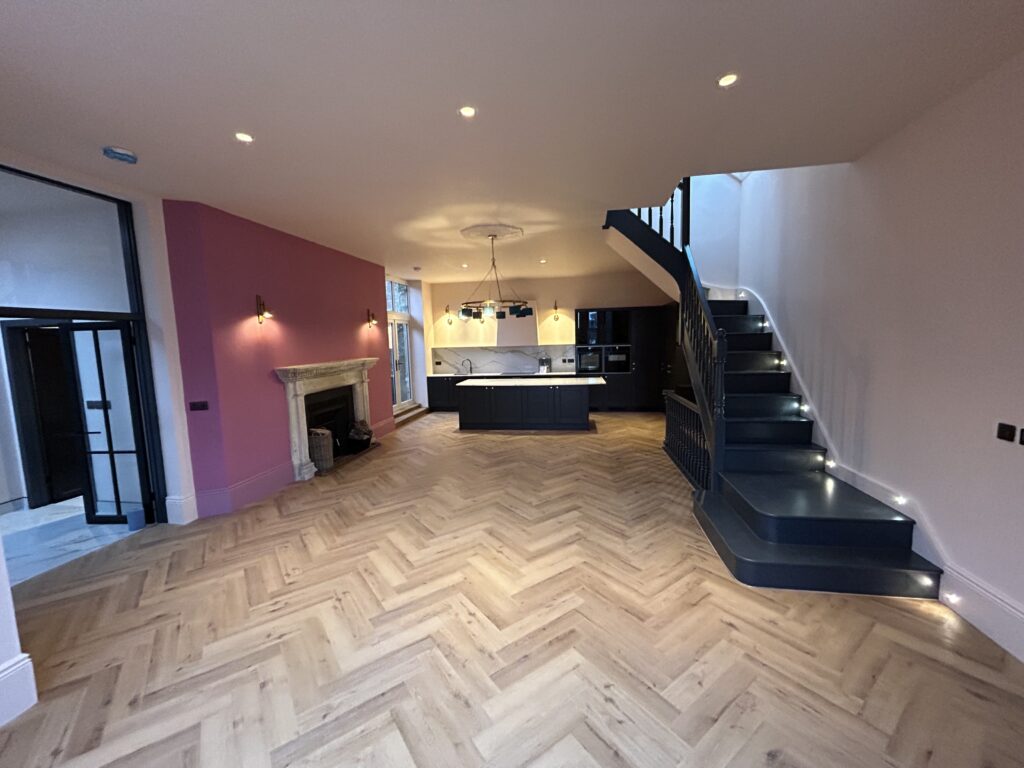
A full house renovation typically runs from a five-figure sum for a single-room or cosmetic refresh to a six-figure sum for a whole-house strip-back with structural work, rewiring and replumbing. The honest answer is that no two renovations cost the same, because the price is driven by decisions specific to your walls, your services and your finishes, not by a national average or your postcode alone.
Excellence Living do publish starting figures for defined, self-contained pieces of work, because the scope of a project like that is knowable in advance. A kitchen reconfigure starts from £20,000, Where the extension is built around a kitchen, our kitchen renovations pages publish the figures for that route. A whole-house renovation is different in kind, not just in size: its price depends on what is behind your walls, which is why it is quoted per property after a free feasibility visit and expressed as the five-figure to six-figure range above, rather than a single starting figure. Those published figures are a useful sense of scale for an individual element of a project, not a total for a whole house, and that is a different thing from publishing an average for a job whose scope is not yet known.
That is not a way of avoiding the question. It is the actual mechanics of how a renovation is priced. A cosmetic refresh of a sound, well maintained house and a full strip-back of a tired, inherited property can sit on completely different floors of that five to six-figure range even if the two houses look similar from the street. The only way to know which one yours is, and what it will cost, is to have someone stand in every room, open a few things up where needed, and price what is actually there.
At Excellence Living we quote per property after a free feasibility visit, because that is the only point at which a price becomes real rather than a guess. This guide sets out what actually moves the cost of a house renovation, what a properly specified quote should itemise, and the costs people forget to budget for, so that when you do sit down with a builder, you know what you are looking at.
Key takeaways
- House renovation costs range from a five-figure sum for cosmetic work to a six-figure sum for a full strip-back with structural, electrical and plumbing changes, and only a feasibility visit turns that range into a real number for your property.
- The main cost drivers are scale, structural changes, the amount of new plumbing and electrics, the finish specification, site access and the condition of the building before work starts.
- A fully specified quote should itemise labour, materials, structural alterations, professional fees, waste removal and VAT as separate lines, not roll everything into one figure.
- Set aside a contingency budget on top of the quoted price for the unknowns that only appear once floors, walls and ceilings are opened up. Advice ranges from 10 to 20 per cent, and the older or more neglected the property, the nearer the upper end you should plan.
- Costs that are genuinely easy to forget include temporary accommodation, storage for your belongings, skip hire and scaffolding, and a fully specified quote should confirm whether these sit inside the price or outside it.
In this guide
What Drives House Renovation Cost · Why an Average Cost Per Square Metre Doesn’t Work for Renovations · The Cost to Renovate a House Varies by Property Type · Cosmetic Refurbishment vs a Full Strip-Back · So, How Much Does It Cost, In Real Terms? · What a Fully Specified Quote Actually Itemises · Professional Fees You Should Expect to See · VAT and a House Renovation · Contingency: How Much to Set Aside on Top of the Quote · The Costs People Forget · How to Compare Two Quotes That Look Different · Why a Number Without a Survey Is a Guess · FAQs
What Drives House Renovation Cost
Every renovation quote is really an answer to six questions about your specific property, and together they explain why house renovation cost varies so much between projects that look similar on paper. Whether you call it a house renovation or a home renovation, the same six questions decide the price, not the label you put on the project. Get the answers to these six and you understand why two houses of the same size can end up with very different renovation costs.
Scale: how much of the house is involved
A renovation confined to one or two rooms costs less than a whole-house project, because there is less to do. Scale is not only about floor area, though: a single room done to a high specification can cost more than a modest refresh spread across several rooms.
What matters is how many rooms are touched, how connected the work is, and how far it reaches into the house. A rewire, for instance, rarely stays confined to one room once you start, and a renovation that reaches into every part of the house costs more than one contained to a single wing or floor.
Structure: what you are moving or removing
Removing a wall, opening up a floor plan, or changing the structural layout of a house is where renovation cost accelerates fastest. That work needs a structural engineer to calculate what is holding the building up and specify what replaces it, usually a steel beam.
The calculation, the steel and the labour to install it safely are all real costs before you touch a single finish. A renovation that keeps the existing layout and improves what is there will always cost less than one that reshapes the floor plan, because you are not paying for structural certainty on top of everything else.
Not all layout changes cost the same. Small layout changes, such as widening a doorway, are far cheaper than the kind that need a structural engineer and a steel beam to hold the building up, or structural repairs to something that was never sound.
Services: Electrics, Plumbing and Central Heating
An older or inherited property often needs a full rewire, new plumbing runs, and an upgraded or replaced central heating system, sometimes including underfloor heating where a floor is already being taken up. This is frequently the part of a renovation that surprises people most, because none of it is visible in the finished result.
You cannot see a consumer unit that has been upgraded to current standards, or plumbing that has been rerouted so a bathroom can move to a different wall, or an en suite bathroom created from part of an existing room. What you can see is a house that works properly, and the cost of getting there is real. These essential upgrades belong in the quote whether or not they show in the after photos.
Finishes: the specification you choose
Two houses can have identical structural and services work and still cost noticeably different amounts, because of what goes on top. Flooring, kitchen and bathroom installations, doors, ironmongery, tiling and decoration all have a wide range of specification. The gap between a standard finish and a premium one is one of the largest single variables in any renovation budget.
Finishes are also the part of the project where you have the most control. Structural and services costs are largely dictated by the building, but finish costs are dictated by the choices you make. That is where a budget can be brought back under control if it needs to be, and where those choices have the most direct effect on the eventual property value of the house.
Adjusting specification, rather than cutting into structural changes or services, is usually the most cost effective way to reduce renovation costs. It keeps the parts you cannot see once the walls are closed up intact.
Access: getting materials, skips and trades to site
A terraced house on a narrow street with no off-road parking is more expensive to work on than a detached house with a driveway and side access, because everything from a skip to a delivery of plasterboard has to be managed differently. Where materials cannot be stored on site, they may need to be brought in stages. Where a skip cannot sit on the road without a permit, that permit has a cost and a lead time.
None of this is dramatic on its own, but access constraints add up across a whole project. A fully specified quote should reflect the actual site, not a generic one.
The state of the building you start with
A well maintained house that simply needs updating is a different proposition to a property that has been empty, neglected or altered badly by a previous owner, and that difference shows up directly in cost. Damp, an ageing roof, old wiring or drainage that no longer meets current building regulations, or structural movement that was never properly addressed are the kind of things that only become fully visible once work starts.
These hidden issues are the single biggest reason a renovation costs more than the first impression suggested. A genuine quote depends on someone qualified inspecting the property before a figure is put on paper. A number given without that inspection is, at best, an educated guess.
Want the exact figure for your property?
These are honest starting points. The free feasibility visit turns them into a fully specified price for your home.
Get My Free Feasibility VisitStill deciding
Not sure what your project actually needs?
Use our home renovation project planner to work through what you want to change, which type of project fits your home and when you would want to start. It takes about a minute and it is there to get your thinking straight before you speak to anyone, not to price the job. The free feasibility visit is what produces a fully specified quote for your property.
Open the home renovation project planner
Takes about a minute. No obligation.
Why an Average Cost Per Square Metre Doesn’t Work for Renovations
An average cost per square metre does not work for a renovation because it treats the whole house as a known quantity, when what is actually behind your walls is the unknown. It is tempting to take a single average cost per square metre for house renovation cost and multiply it by the floor area of your property to arrive at a number.
For a new build, where every square metre starts from the same empty ground and the same blank structure, a figure like that can be a reasonable starting point. For a renovation, it is close to useless: this applies whatever you call the project, since a home renovation cost and a house renovation cost are priced on the same basis.
A new build prices a known quantity: foundations, a shell and a fit-out, applied fairly consistently across every square metre of the design. A renovation prices whatever is actually behind your walls, and that is different in every property.
Two houses of an identical size can need completely different amounts of structural work, completely different amounts of new wiring and plumbing, and completely different levels of finish, and none of that shows up in a square metre figure. Typical costs vary so much between a cosmetic refresh and a full strip-back of the same size house, covered in more detail below, that an average cost per square metre collapses that whole range into one misleading number.
UK Renovation Costs Vary by Region, Not by a National Number
Regional variation adds a further problem. The same specification of work typically costs more in London and the South East than it does in other parts of the country, because labour rates and demand differ by region, and it is one more reason renovation costs in the South East are not a fair guide to renovation costs anywhere else. These regional price differences are one more reason a single UK-wide figure cannot tell you what your own renovation will cost. A national average per square metre figure is averaging across very different regional markets before it has even reached your specific house.
This is also why Excellence Living does not quote from an average cost per square metre. Once someone has actually seen your property, opened up what needs opening up, and understood the condition, the scale, the project scope and the specification you want, a proper figure can be built from what is really there. That is what a free feasibility visit is for, and it is a more honest starting point than any square metre calculation could ever be.
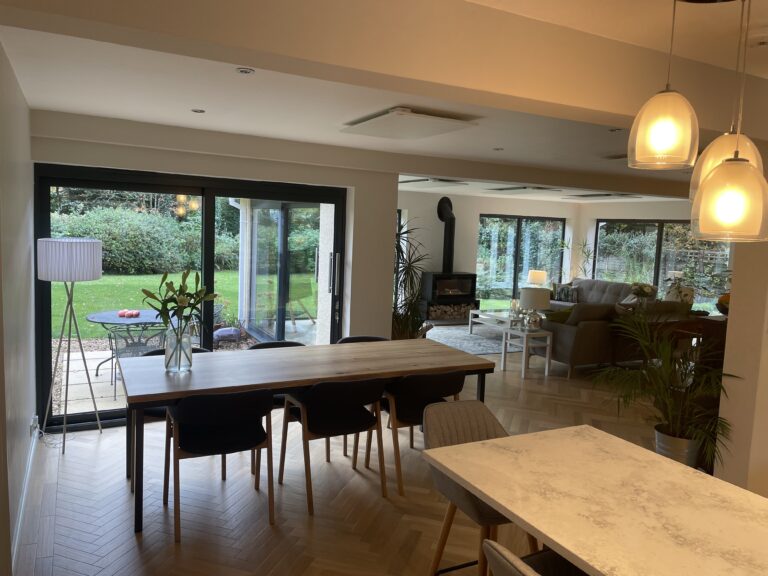
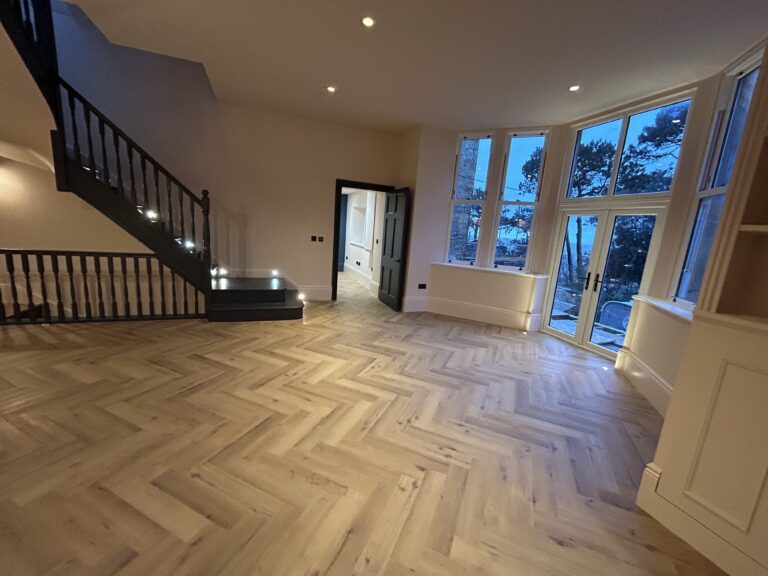
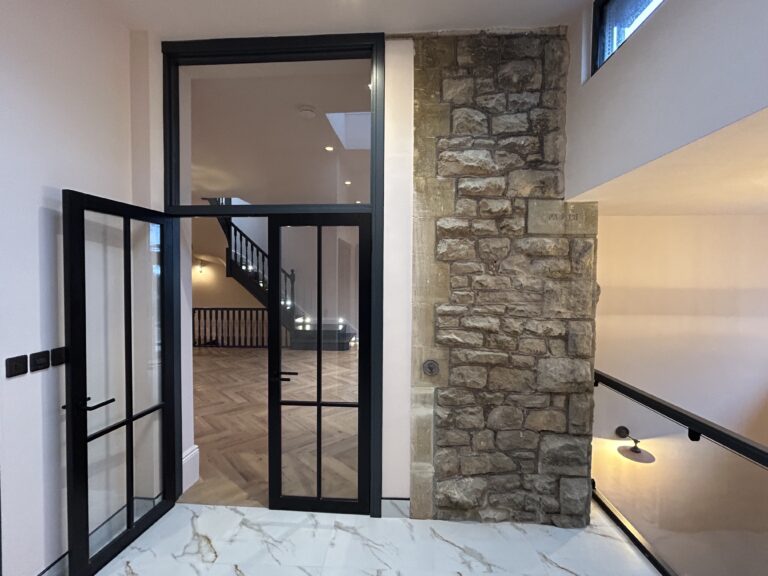


← Swipe to see more projects →
The Cost to Renovate a House Varies by Property Type
The cost to renovate a house depends heavily on what kind of house it is, not just its size. A Victorian terrace, a 1930s semi and a 1990s detached house in the UK each bring a different starting point to a renovation, because the age of a property changes what is likely to be behind the walls and under the floors.
Typical costs for a Victorian terrace and a 1990s detached house of the same floor area can differ substantially. That is exactly why property type matters as much as square footage, and it shapes home renovation cost every bit as much as it shapes house renovation cost.
Older properties are more likely to need work that a newer house simply does not: rewiring behind original plaster, replacing old lead or iron pipework, addressing damp in solid walls that were never designed with a cavity, and bringing insulation and energy efficiency up to a standard the house was never built to. Renovating an older home often carries more hidden risk than renovating a newer one, which is exactly why the cost to renovate a house of that age benefits from a thorough feasibility visit rather than a figure based on floor area alone.
Property type also affects what you can do without extra permissions. An internal renovation that keeps the external walls, roof and footprint of the house untouched is generally more straightforward from a planning permission standpoint than one that changes the shape or footprint of the building. Most internal renovation work falls under permitted development rather than requiring a full planning application.
Listed buildings and properties in conservation areas are the exception: they may need planning permission even for straightforward internal work, and this should always be checked locally before you commit to a specification. Bringing an older property’s services up to current building regulations is a separate question from planning permission, and a proper quote should be clear about which of the two applies to your project, and when.
None of this changes the basic point of this guide, whether you think of it as a house renovation or a home renovation. When you renovate a house, the honest answer to what it costs is still the same: it depends on your specific property, not on which category it falls into.
Cosmetic Refurbishment vs a Full Strip-Back
Cosmetic refurbishment and full strip-back get used loosely as terms, and the difference between them is one of the biggest reasons renovation quotes vary so widely.
A cosmetic refurbishment leaves the structure, the layout and most of the services alone and focuses on the visible surfaces: new flooring, redecoration, updated kitchens or bathrooms without moving them, new doors and ironmongery, and general tidying up of a house that is fundamentally sound. This is the lower end of the renovation cost range, because the expensive, invisible work (structure, wiring, plumbing) either does not happen or happens in a very limited way.
A full strip-back means taking a property back close to its shell: removing old plaster to expose the walls, replacing electrics and plumbing throughout, addressing structural issues, upgrading insulation, heating and overall energy efficiency, and reconfiguring rooms where it makes sense to do so. This is a structural renovation in the fullest sense, not simply a change of finishes, and it is the higher end of the range, where the six-figure sums genuinely apply on larger properties.
A full strip-back is also the more predictable of the two once the survey is done, because you are not trying to work around and preserve existing services and structure. You are starting close to a blank canvas and building it back properly.
Most renovations sit somewhere between these two extremes. Part of what a feasibility visit does is establish where on that spectrum your project actually sits, because that single decision affects the price more than almost anything else.
It is entirely possible, and often sensible, to specify a project as a hybrid: a full strip-back in a kitchen or bathroom where the layout is changing, alongside a cosmetic refresh in bedrooms and living spaces that already work well. That is a legitimate way to control cost without compromising the parts of the house that matter most to how you live in it.
So, How Much Does It Cost, In Real Terms?
Pull the sections above together and the honest answer to how much does it cost stays the same: a five-figure sum for cosmetic work, a six-figure sum for a full strip-back, and everything in between depending on scale, structural changes, services, finishes, access and condition. There is no single average house renovation cost that means anything until it has been tested against your own walls, whether you call the project a house renovation or a full house refurbishment.
For most UK homeowners, the useful question is not what renovation costs in general but what drives the renovation costs on their own project, and where there is room to reduce renovation costs without touching structural changes or services. Adjusting specification is usually the most cost effective way to do that, whether the goal is a better living space within your existing footprint or simply updated finishes.
Duration is the other half of this question, and Excellence Living deliberately do not convert it into a week count for a whole-house project, because scope varies too much for a single figure to be honest. As a guide, a single-room renovation is typically a matter of weeks, whilst a whole-house reconfiguration runs to several months, because the duration of a home renovation depends significantly on the scope of work involved. Our home renovation project planner takes about a minute, works from the same Under £25,000 / £25,000 to £50,000 / £50,000+ bands used to open every renovation conversation, and gives you a starting point before a free feasibility visit turns it into a fully specified quote.
What a Fully Specified Quote Actually Itemises
A single lump sum figure is not a quote, it is a headline, and it is the single most common reason two quotes for what looks like the same job end up impossible to compare. A fully specified quote should break the project down into a detailed cost breakdown of distinct, understandable lines, including:
Labour, broken down by trade or by phase, so labour costs are visible separately from materials rather than folded into one figure.
Materials, itemised by category (structural materials, first fix, second fix, finishes) rather than bundled into one figure, so a change in specification for one element does not require the whole material costs figure to be recalculated from scratch.
Structural work, including the structural engineer’s site survey and design fee, any steel or structural timber required, and the labour to install it, listed separately because this is where cost can move significantly if something unexpected is found once a wall or floor is opened up. Surveys for structural alterations can incur additional costs of their own, so a fully specified quote should show that survey as its own line rather than folding it into the design fee.
Professional fees, covering any architect, designer or structural engineer input, and the Building Control application, inspection and building regulations compliance fees, so you know exactly what you are paying for oversight and compliance as distinct from the physical build.
Waste removal, including skip hire and disposal, which is a genuine cost on any renovation of size and one that is often left out of an early estimate only to appear later as an add-on.
VAT, shown as its own line so you can see the pre-VAT figure and the VAT treatment applied, rather than a single VAT-inclusive total that hides how the rate was worked out.
A quote built this way lets you see where your money is actually going relative to the total cost, and lets you make an informed decision if you need to adjust the specification to bring the total down, which eases the renovation process. It also means that if a genuine unknown appears once work starts, the change is easy to price and agree, because you already have a clear baseline to price against.
Excellence Living builds every quote this way, and it is also why our quotes only exist after a feasibility visit. An itemised quote for a property nobody has inspected is not more accurate for having more lines in it. It is still a guess, just a more detailed looking one.
Want the exact figure for your property?
These are honest starting points. The free feasibility visit turns them into a fully specified price for your home.
Get My Free Feasibility VisitProfessional Fees You Should Expect to See
Depending on the scope of your renovation, a proper quote may include fees for an architect or designer to draw up the plans, a structural engineer to specify any structural changes, and Building Control to inspect and confirm the work meets current building regulations.
Surveys for structural alterations can incur additional costs of their own, because assessing what is currently holding the building up is a distinct piece of work from specifying what replaces it. Where structural work is significant, that site survey is sometimes costed separately from the structural engineer’s design fee. Clarify this upfront rather than assuming one figure covers both.
Professional fees are not optional extras to be quietly absorbed elsewhere in the budget. They are a genuine part of delivering a renovation that is safe, compliant and properly documented. A quote that does not mention them at all is either assuming you are sourcing them yourself, or has left them out entirely, and either way is worth clarifying before you sign anything.
At Excellence Living we handle project management as part of a single contract, so you are not coordinating separate professionals and separate invoices yourself. One contract, one point of accountability, and a dedicated Site Manager for the duration of the project, which means the professional fees are part of the same itemised quote rather than a parallel set of costs you are chasing on your own.
Ready to see what your space could become?
Get a detailed, fully specified quote so you know exactly what is included and why.
No obligation. No sales pressure. We come to you.
VAT and a House Renovation
VAT applies to the great majority of house renovation work in the UK at the standard rate, though there are recognised, narrower circumstances (chiefly properties that have stood empty for a defined period before work starts) where a reduced rate can apply. The rules are specific and depend on the history of the particular property, not just its current condition, so this is genuinely a case-by-case question rather than something a general guide can answer for your house.
What matters for your quote is that the VAT position is confirmed early and shown clearly as its own line, so you know whether a figure you are looking at is inclusive or exclusive of VAT, and on what basis. A quote that is silent on VAT, or that buries it inside a single total, is one of the easier ways for two prices to look different when they are not actually comparing the same thing.
Contingency: How Much to Set Aside on Top of the Quote
A contingency is money set aside on top of the quoted price in the hope of not needing it. Advice on how much varies: you will see anything from 10 to 20 per cent suggested, occasionally more for a property in unknown condition.
Work your own contingency from your own quote and your own property, rather than picking a number off the internet. The things a contingency covers, opening up floors, chasing out old wiring, discovering what a previous owner hid, scale with the age and condition of your house rather than with its price.
A sound, well maintained house that is being updated needs less set aside than a neglected or inherited property being taken back to its shell. If you are going to be wrong about this, be wrong on the generous side: a contingency you did not need is money you still have.
A contingency is not a sign that the quote is unreliable, and it is not padding built into the price to cover a builder’s margin. Treat it as a genuine contingency budget rather than a discretionary fund to dip into for upgrades, and keep it separate from any decision to change the specification partway through.
It exists to cover unexpected expenses because some things about a house genuinely cannot be known until the work is underway. A floor comes up and the joists beneath are in worse condition than expected. A wall is opened and there is a run of old pipework nobody knew was there. A damp patch that looked cosmetic turns out to have a source that needs proper investigation.
A fully specified quote, built from a thorough feasibility visit, removes the great majority of these surprises by finding as much as possible before work starts rather than during it. A contingency exists for the genuine minority that cannot be found until the building is opened up, and if it is not needed, it is not spent. Whilst every renovation can uncover genuine unknowns, Excellence Living believe homeowners should never be surprised by how changes are handled: any additional requirements are clearly documented, explained, fully costed, discussed with you, and agreed in writing before work proceeds.
What contingency is not for is scope creep. Deciding halfway through that you want a different kitchen layout, or adding a bathroom that was never part of the original brief, is a change to the project, not an unknown that a contingency is meant to absorb. Keeping those two things separate, genuine unknowns versus decisions you have made, is what stops a renovation budget drifting without anyone quite noticing why.
The Costs People Forget
Beyond the build itself, a handful of costs sit around the edge of most renovation projects and catch people out precisely because they are easy to overlook when comparing headline figures. Avoiding budget surprises later means accounting for all of them from the start.
Temporary accommodation
If your renovation is extensive enough that the house is not liveable for a period, whether because there is no kitchen, no bathroom, no heating, or genuine safety concerns around ongoing structural work, you need somewhere to stay. The length of time and the standard of accommodation you choose both affect the cost, and this is worth planning and budgeting for early rather than treating as a late scramble once work is already under way.
Storage
Furniture, belongings and anything not being worked on needs to go somewhere during a renovation, whether that is a spare room being used as a temporary store, a garage, or a hired storage unit for the duration of the project. On a full strip-back this can mean storing the contents of an entire house for weeks or months, and that has a cost whether it is cash changing hands for a unit or simply the practical cost of your own time and effort moving things twice.
Skips and waste
A renovation of any real size generates a genuine volume of waste, from old plaster and flooring to packaging from new materials, and that waste has to be removed responsibly. Skip hire, and in some areas the permit needed to place a skip on a public road, is a real cost that belongs in the quote as its own line rather than being assumed as included when it is not.
Scaffolding
Any external work, whether that is re-rendering, roof repairs, new windows at height, or work to a chimney, is likely to need scaffolding, and scaffolding has its own hire cost, erection cost and duration-based charge the longer it stays up. Because it is easy to picture a renovation as entirely internal, scaffolding is one of the costs people are most likely to forget entirely until a quote arrives with it included, or worse, until it is added later as a surprise.
Legal costs
If you are renovating a property you have just bought, legal costs such as stamp duty land tax and conveyancing sit outside the renovation quote itself. They are a real part of your overall budget and worth accounting for separately from the build cost. The same applies to any party wall agreements needed where work affects a shared wall with a neighbour, which carry their own legal cost and timescale.
None of this is something a builder’s quote will include, because it sits with your solicitor rather than your contractor. It still belongs in your total cost planning from the start.
A fully specified quote from a properly organised contractor should state plainly whether each of these sits inside the quoted figure or outside it, so you are not discovering the answer partway through the project.
How to Compare Two Quotes That Look Different
It is common to get two quotes for what looks, on paper, like the same renovation and find the figures many thousands of pounds apart. Before assuming one builder is simply better value than the other, it is worth checking whether they are actually pricing the same job.
Start with what is included. A lower figure that excludes professional fees, waste removal, or a contingency allowance is not necessarily a cheaper job, it may simply be a partial quote next to a complete one. Ask each builder to confirm explicitly what is and is not included, and get that confirmation in writing.
Check the specification behind the price. A kitchen allowance, a flooring allowance, or a fittings budget can vary enormously between two quotes that describe the work in the same few words. “New kitchen” covers a vast range of actual cost, and the only way to compare fairly is to see what specification each figure assumes.
Look at how the structural and services elements are priced. A quote that has clearly been built from a proper survey, with structural changes and services itemised against what was actually found in your property, is a fundamentally different document to one built from a walk-through and a rough estimate. The second kind is often lower because less has actually been investigated, not because the work will genuinely cost less once it starts.
Ask who is doing the work. A single contractor managing the whole project under one contract, with their own trades and a dedicated Site Manager, carries a different kind of accountability to a price built around multiple subcontractors coordinated by you or loosely overseen by the main contractor. That is not purely a cost question, but it affects what you are actually comparing when you put two numbers side by side.
At Excellence Living, every quote follows a feasibility visit and comes itemised, so there is nothing hidden in a single number for you to try to reverse-engineer. If you are comparing our quote to another, the fairest test is simply to ask the other builder for the same level of detail. If they cannot provide it, that tells you something about how the number was arrived at.
Why a Number Without a Survey Is a Guess
Every section of this guide leads to the same honest point. Scale, structure, services, finishes, access and the condition of the building are all specific to your property, not to a national average or a rule of thumb. Any figure given before someone has actually inspected your house, opened a few things up where necessary, and understood what they are pricing is, at best, a rough range, and at worst, a number designed to get you to sign something before the real price is known.
Excellence Living does not publish a price list for full house renovations, and that is not a way of avoiding the conversation about cost. It is the opposite: a genuine home renovation cost, like a genuine house renovation cost, only exists once someone has been to your property, and the free feasibility visit is how that happens, with no obligation attached.
We have worked this way for over 30 years, with our own in-house team rather than subcontractors, one contract covering the whole project, and a dedicated Site Manager on every job. That is part of why our quotes hold up once work actually starts, rather than growing through a string of unexpected extras.
If your renovation is focused on a single space, our kitchen renovation and garage conversion pages cover the costs specific to those projects, and a loft conversion is worth a look if you need more space without touching the existing footprint of the house. Basement conversions are also something we handle, worth raising at your feasibility visit if you have an existing cellar or the ground conditions to consider one. If what you actually need is more floor area rather than a reconfiguration of what you already have, that moves into house extension territory, which is a related but genuinely different project with its own cost drivers.
To see what a full renovation quote actually looks like once it has been through a proper survey, our case studies are the honest reference point. Tom and Kate Clark’s full house renovation in North Somerset, Tim and Hazel Hayden’s Clevedon full house renovation, Spencer and Kirsty Buck’s extensive house renovation, Sharon and Richard Dunn’s whole house re-render and external works, and Aly Kounnou’s lounge renovation each show a real property, a real scope of work, and how the two connect. That is a better guide to what your renovation might cost than any generic figure could ever be.
Book your free feasibility visit and we will come to your property, look at what is actually there, and give you a fully specified, itemised price with everything accounted for. No obligation, no sales pressure. You can also call us directly on 01934 515 668 to talk through your project first.
Frequently asked questions
How much does a full house renovation cost in the UK?
Costs range from a five-figure sum for a cosmetic refresh to a six-figure sum for a full strip-back involving structural alterations, rewiring and replumbing, with the actual figure depending on the scale, structure, services, finishes, access and condition of your specific property. A genuine, reliable figure only comes from a feasibility visit rather than a general guide. Our home renovation project planner gives an indicative starting point in the meantime.
What is the difference between a refurbishment and a full renovation?
A cosmetic refurbishment updates the visible surfaces of a house, such as flooring, decoration and fittings, whilst leaving the structure, layout and most of the services untouched. A full renovation, or strip-back, goes further, addressing structure, electrics, plumbing and often the layout itself, which is why it sits at a higher point on the cost range.
Is it cheaper to renovate than to extend?
Renovating the space you already have is generally cheaper than extending, because an extension involves new foundations, new external walls and a new roof, none of which apply when you are working within an existing structure. Whether renovating alone meets your needs depends on whether you actually need more floor area or simply need to use what you have better.
Do I need to pay VAT on a house renovation?
VAT applies to the standard rate on the great majority of renovation work, though there are narrower circumstances, chiefly involving properties that have been empty for a defined period, where a reduced rate can apply. VAT treatment depends on the specific history of your property, so it should be confirmed as part of your quote rather than assumed either way.
How much contingency should I set aside for a house renovation?
Published advice ranges from about 10 to 20 per cent on top of the quoted price, and the right figure for you depends on the age and condition of your property rather than on a national average. Plan nearer the upper end for an older, neglected or inherited house, and nearer the lower end for a sound property being updated. A contingency covers genuine unknowns that only become visible once floors, walls or ceilings are opened up, not changes of mind about the specification, which should be treated as a separate decision.
What should a fully specified renovation quote include?
A fully specified quote should itemise labour, materials, structural work, professional fees, waste removal and VAT as separate lines, so you can see exactly what you are paying for. A single lump sum figure with no breakdown is not a quote you can properly evaluate or compare against another.
Does a structural survey cost extra on a house renovation?
Yes. Surveys for structural alterations can incur additional costs of their own, separate from the structural engineer’s design fee, because assessing what is currently holding a building up is a distinct piece of work from specifying what replaces it. Where structural changes are significant, a fully specified quote should show that survey as its own line, so you know whether the design fee already includes it or not.
Can I get an accurate renovation price without a site visit?
No. Any figure given without someone qualified inspecting the property is a rough range at best, because the condition of the building, the scope of structural and services work, and the site access all need to be seen in person to be priced properly. This is why Excellence Living quotes only follow a free feasibility visit.
What costs do people typically forget to budget for?
Temporary accommodation, storage for belongings during the works, skip hire and scaffolding are the costs most often left out of an early budget, because they sit around the edge of the build itself rather than being part of the visible finished result. A properly itemised quote should state clearly whether each of these is included.
Why do two quotes for the same renovation look so different?
Two quotes usually differ because they are not actually pricing the same job. Differences in what is included (professional fees, waste removal, contingency), the specification assumed for kitchens, bathrooms and finishes, and whether the price was built from a proper survey or a rough walk-through all produce very different headline figures for work that sounds identical on paper.
Does Excellence Living offer a fixed price list for house renovations?
No, and deliberately so. Every house is different, and a price list cannot account for the structure, services and condition specific to your property. Instead, we offer a free, no obligation feasibility visit that produces a fully specified, itemised price for your actual house, which is a far more useful and accurate figure than any generic range.
How can I keep renovation costs under control without cutting corners?
Renovation costs are easiest to control at the finish specification stage, because structural changes and services are largely dictated by the building whilst flooring, fittings and fixtures are dictated by you. A fully specified quote with a clear cost breakdown, showing labour costs, materials and professional fees as separate lines, makes it obvious where that flexibility actually exists, so you can save money on specification rather than on the structural alterations or services you cannot see once the walls are closed up.
How much does a typical home renovation cost in the UK, and is there an average cost to renovate a house in the UK?
There is no single figure that means anything useful, whether you call it a home renovation cost or a house renovation cost. Location, property type, condition and specification all move the price independently of each other, and an average cost to renovate a house in the UK, or an average cost per square metre, glosses over all of it. A genuine figure only exists once someone has inspected your specific property, which is exactly what our free feasibility visit is for.
Does a home renovation increase property value?
Yes, a well executed home renovation can increase property value. The effect depends on the local market and the specification chosen rather than on a fixed percentage return, though renovations that add a functional room, improve energy efficiency or bring a dated house up to a modern standard are the ones most likely to do it. We do not quote a guaranteed uplift in property value because that is not something any builder can honestly promise, it is something your local market determines.
Who manages a house renovation project day to day?
At Excellence Living, project management sits with a dedicated Site Manager for the duration of your renovation project, so you have one point of contact rather than juggling separate trades yourself. This is part of why our quotes hold up once a renovation project is under way, project management is built into the contract rather than left for you to coordinate.
Do you handle smaller home renovation projects, or only whole-house work?
Yes. Whilst much of this guide focuses on whole-house work, the same six cost drivers apply to a smaller home renovation, whether that is a single room or a few connected spaces, and every home renovation project we take on still starts with the same free feasibility visit.
Does Excellence Living publish any fixed prices?
Yes, for defined, self-contained pieces of work, because the scope of those is knowable in advance. A kitchen reconfigure starts from £20,000, Where the extension is built around a kitchen, our kitchen renovations pages publish the figures for that route. A whole-house renovation cannot be priced the same way because its cost depends on what is behind your walls, which is why it is quoted per property after a free feasibility visit and expressed as a five-figure to six-figure range rather than a single starting figure. The published figures give you a sense of scale for an individual element, not a total for a whole house.
Get Your Renovation Price
Every renovation is different, so the only accurate number is the one worked out at your property. Tell us what you are planning and we will arrange your free feasibility visit, then give you a fully specified price with everything itemised.
"*" indicates required fields